Taupe Meaning: Unlocking the Enigma of this Versatile Neutral
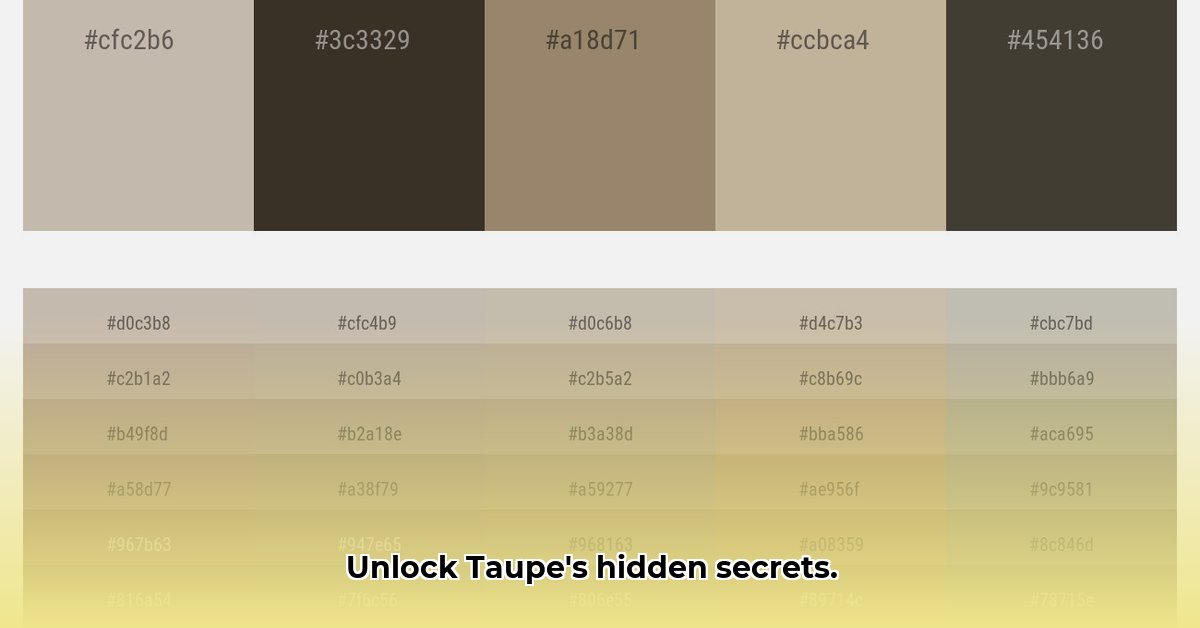
Right, so you're keen to get a handle on taupe, is it? It's not as straightforward as you might think. It's not one single colour, but rather a whole family of subtly different shades, all hovering around a greyish-brown. Think of it like this: some lean more towards brown, others towards grey, and some are almost beige. Even the lighting can dramatically change how it looks! This guide will help you understand these nuances, showing you how to use taupe in your home, your clothes, and even your makeup. We'll cover everything from its inherent ambiguity to choosing the perfect shade and combining it with other colours. Let's ditch the confusion and embrace the surprisingly versatile world of taupe!
The Many Shades of Taupe: From Misty Morning to Desert Sunset
The charm—and the challenge—of taupe lies in its amazing variety. Some taupes are cool and greyish, like a smoky winter's day, while others are warm and brownish, reminiscent of a sunny beach. Think of the difference between a misty, grey-brown morning and the warm, earthy tones of a desert sunset – that's the range we're talking about! This inherent ambiguity is what makes it so fascinating, and also a bit tricky to pin down. One person's "taupe" might be another person's "greyish-brown" or even "light brown." There's no official, universally agreed-upon colour chart for taupe! This is partly because it sits right on the border between brown and grey, making it a naturally fluid colour.
Here's a table visualising the different shades:
| Shade Description | Associated Feeling | Example Applications |
|---|---|---|
| Cool, greyish-brown | Modern, sophisticated, calm | Minimalist décor, sleek clothing |
| Warm, brownish-grey | Earthy, comforting, cozy | Rustic interiors, classic attire |
| Light taupe, almost beige | Sweet, airy, gentle | Spring/summer fashion, bright rooms |
| Dark taupe, almost charcoal | Dramatic, moody, mysterious | Autumn/winter clothes, bold accents |
| Reddish-brown taupe (unusual) | Rich, intense, powerful | Statement furniture, eye makeup |
Taupe in the Real World: Fashion, Interior Design, and More
Taupe's versatility shines through its widespread use. In fashion, it's a classic neutral, pairing beautifully with almost any colour – bright blues, deep greens, even fiery reds. In interior design, it creates a calming, sophisticated backdrop, making bolder colours and patterns pop. It can create a sense of spaciousness or a cosy atmosphere, depending on the shade and how it's used. In makeup, a taupe eyeshadow can be both subtle and striking, adding depth to the eyes.
Isn't it amazing how adaptable taupe is? It's a true testament to the colour's versatility.
Choosing and Using Taupe: Tips and Tricks for Success
Choosing the perfect taupe is like finding the perfect pair of jeans – it takes some exploration. Lighting is key! A warm taupe might look inviting under warm light but a bit drab under harsh fluorescent lighting. Consider the mood you want: a sleek, modern space, or a warm, inviting haven? Your choice will dramatically impact the overall atmosphere.
Pairing taupe with other colours is also crucial. Because it's a neutral, it's very forgiving; however, certain combinations will create unique vibes. Experiment! Try pairing it with bright colours for a striking contrast, pastels for a softer mood, or other neutrals for a calming, monochromatic scheme.
The Ambiguity of Taupe: Why the Fuzzy Definition? Is It a Problem?
The lack of a precise definition isn't a problem – it's part of its appeal! Its position between brown and grey makes it inherently fluid, its exact shade always open to interpretation. It's perfect for those who want a touch of subtlety and mystery, a colour that whispers rather than shouts. It’s a colour that can be many things to many people.
Step-by-Step Guide to Using Taupe Effectively
- Define Your Mood: What feeling do you want to create – serene, sophisticated, or cosy?
- Choose Your Taupe: Select a shade with undertones that complement your mood and lighting.
- Consider the Space: Lighter taupes can make smaller spaces feel more open.
- Select Complementary Colours: Choose accent colours that create contrast or harmony.
- Experiment with Textures: Incorporate diverse textures for added visual interest.
This structured approach ensures successful integration of taupe in any project.
How to accurately define and use the taupe color in design
Key Takeaways:
- Taupe's versatility makes it a design chameleon. It adapts to almost any style.
- Understanding taupe's undertones (warm vs. cool) is crucial for design success.
- Lighting significantly affects taupe's appearance. Pay attention to your lighting source.
- Successful taupe use involves thoughtful pairings with complementary colours.
- Taupe's adaptability spans various design styles, from rustic to ultra-modern.
How do we define and accurately use this elusive colour? It's a spectrum, not a single point on a colour chart. Some lean towards warm, earthy browns; others towards cooler, almost greyish tones. This inherent variability makes it versatile, but also challenging to define precisely.
Defining the Elusive Taupe
Taupe isn’t a single, precisely defined colour. Think of it as a family of related hues. This variability is what makes taupe so versatile and also so difficult to define precisely. It’s like trying to capture the essence of twilight – a beautifully ambiguous moment in time.
Understanding Taupe's Undertones: Warm vs. Cool
The key to mastering taupe is recognizing its undertones. Warm taupes, with reddish-brown notes, create cozy spaces. Cooler taupes, with greyish undertones, offer a more modern, sophisticated feel. Choosing the right undertone is vital for setting the mood.
The Impact of Lighting on Taupe
Lighting dramatically affects how taupe appears. A warm taupe might feel very different in bright sunlight versus soft, evening light. Natural light can bring out the warmth, while artificial light might shift it to something cooler. Always consider your lighting.
Pairing Taupe with Other Colours
Taupe's versatility extends to pairing. Its neutral nature means it harmonises with vibrant colours. A warm taupe complements jewel tones and deep greens. Cooler taupes pair beautifully with lavenders and blues. Experiment to find perfect balances.
Taupe in Different Design Styles
Taupe transcends design trends. It works beautifully in rustic schemes paired with natural textures. Equally, it enhances sleek, modern settings alongside glass and metal accents. The possibilities are endless.
https://www.architecturaldigest.com/gallery/taupe-color-design-ideas